
Preventative DEA Compliance: How to Build a Maintenance Schedule

Preventive Schedule CollageWe all know how important preventative care is for our patients—early detection, proactive treatments, fewer surprises. So why don’t we treat DEA compliance the same way?


Too often, compliance gets pushed to the back burner until it becomes an emergency: a surprise inspection, a mismatched logbook, or a missing bottle no one can explain. And when things get that far off track, fixing it is way more stressful (and expensive) than just keeping up with the routine care.


The good news? Just like we recommend wellness visits for pets, you can build a preventative care schedule for your compliance program. This way you’ll keep ahead of DEA requirements and avoid the panic of playing catch-up.
Why Ongoing Compliance Matters

DEA compliance isn’t a one-and-done deal. Even the best systems can unravel without regular upkeep. Team turnover, new medications, shifting workflows, and plain old human error creep in over time.
A structured schedule ensures the small things stay small—and nothing falls through the cracks. A little upfront planning can help your practice go from reactive to proactive compliance—without overwhelming your team.

From Logging to Oversight: What Must Be Maintained

Compliance isn’t about paperwork for paperwork’s sake—it’s about preventing problems before they happen. The DEA expects clear documentation, consistent practices, and total visibility into your controlled substances. That only happens with regular maintenance.
Here’s what to keep an eye on, and why:

  • Log Accuracy: Every log must be accurate, legible, and timely. Real time logging is essential because backlogged entries = forgotten doses, mistakes, or even missed diversion.
  • Reconciliation: Regularly matching logs with PIMS, invoices, and patient records helps catch errors before they become liabilities—especially before an audit.
  • Inventory & Expirations: Expired or unsecured meds are easy red flags for auditors. Monitor closely reorder points, CII counts, and expiration dates to stay ahead.
  • Staff Training & SOP Reviews: Your protocols should evolve with your team. Refreshers and reviews keep everyone aligned and reduce risk from process drift.
  • Reporting & Documentation: From PMP reporting to biennial inventories, staying current helps you avoid last-minute scrambles and costly oversights.
  • Mock Audits & Internal Checks: Routine spot-checks give you insight into what the DEA will see—catch and correct issues early while there’s still time.

A Sample DEA Compliance Schedule That Works

Now that you know what needs routine attention, here’s a suggested timeline that keeps things manageable and repeatable. Tweak it as needed based on your workflow, case load, and team size.

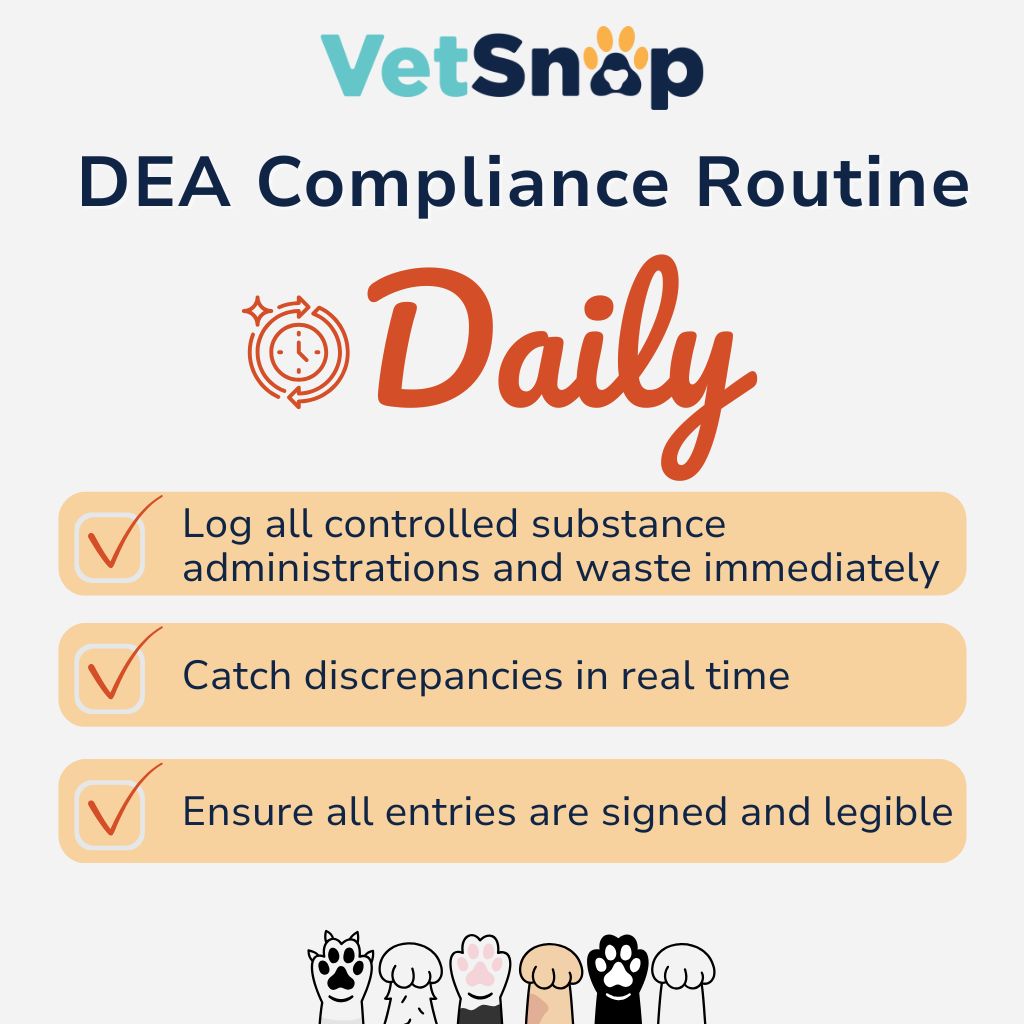
Daily

  • Log all controlled substance administrations and waste immediately
  • Catch discrepancies in real-time
  • Ensure all entries are signed and legible

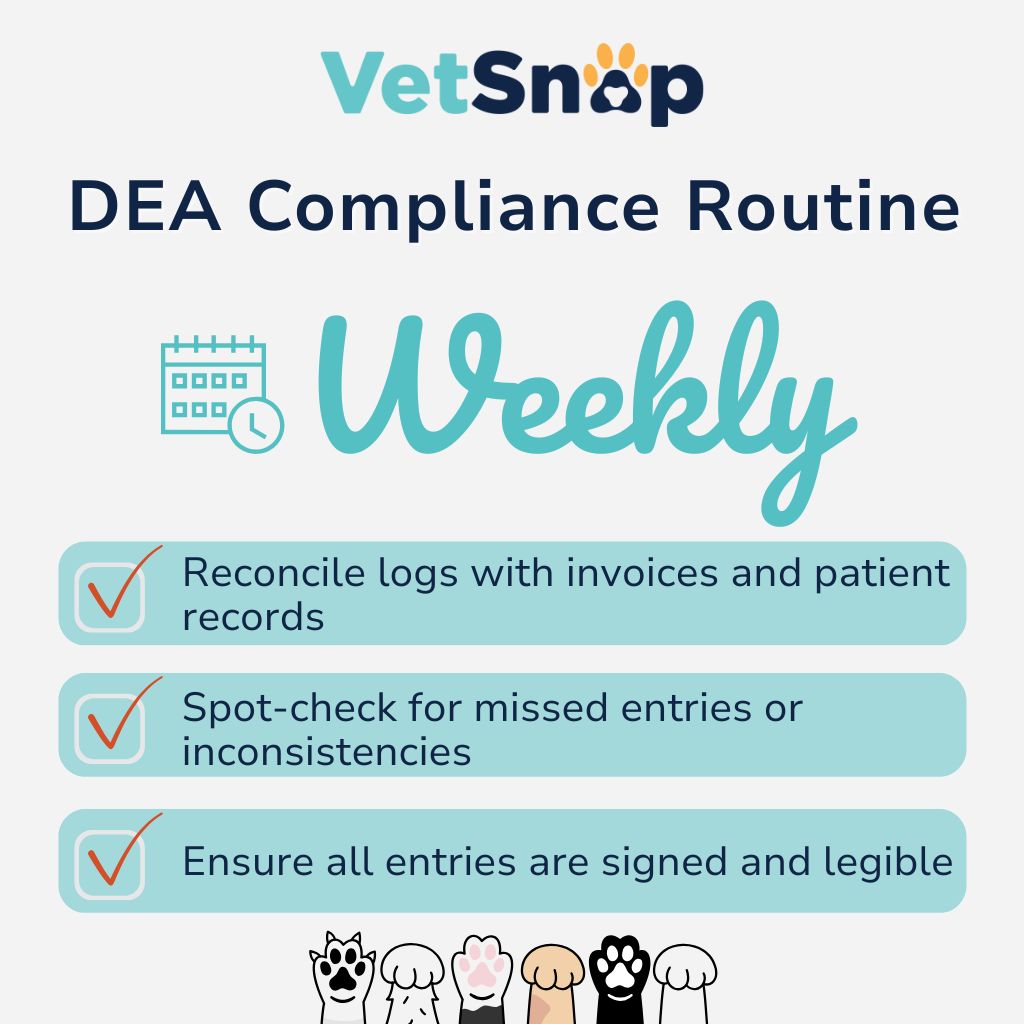
Weekly

  • Reconcile logs with invoices and patient records
  • Spot-check for missed entries or inconsistencies
  • Follow up on issues while they’re still fresh

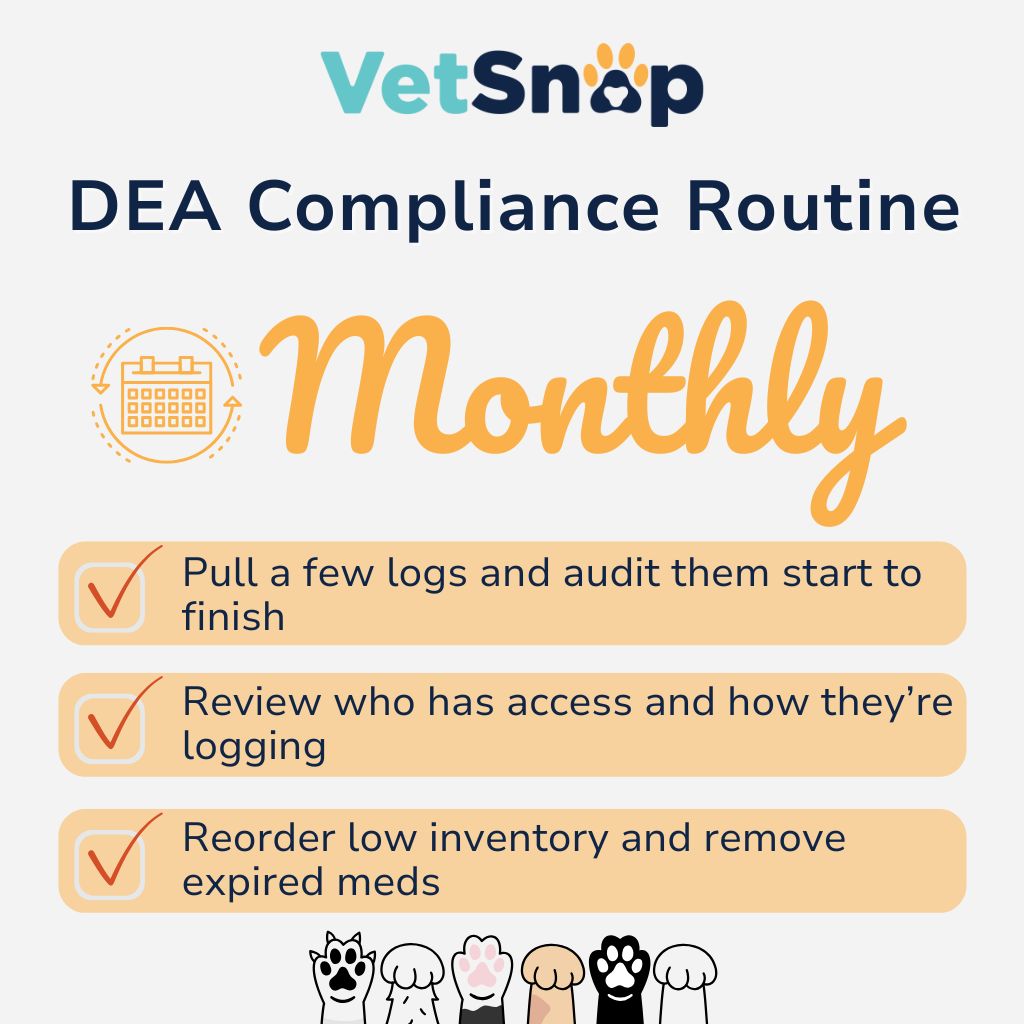
Monthly

  • Pull a few logs and review them from start to finish

  • Check who has access and how they’re logging

  • Reorder low inventory and remove expired meds

Quarterly

  • Perform a full log reconciliation

  • Review and update SOPs as needed

  • Conduct a mini internal audit or spot-check

  • Prep training refreshers for new or returning staff

Annually

  • Complete any required DEA compliance CE
  • Perform a full internal DEA mock audit
  • Review your PMP submissions and state-specific reporting
  • Prepare for or complete biennial inventory (if applicable)

Stick to It: Building a Team-Friendly Compliance Schedule

You don’t have to do it all at once. The key is spacing tasks out in a way that’s sustainable for your team. Some practices build these checks into existing meetings, rotate responsibilities across roles, or use automation tools to help manage reporting and reminders. The goal isn’t rigidity—it’s repeatability.
If you’re not sure where to start, we’ve got you covered. 

Download our DEA Compliance Preventative Care Schedule—a ready-to-use template you can customize for your clinic’s needs. 

Final Thoughts

Compliance doesn’t have to be complicated—but it does have to be consistent. Treat it the same way you treat your patients: with structure, attention, and a plan that fits your team.
Because in veterinary medicine, prevention is always the best medicine—even when it comes to your DEA logs.

Want to ensure your practice is 100% compliant? Book a Demo with our team right away:

Ready to find out how easy DEA compliance can be?​​

Ready to find out how easy DEA compliance can be?​

Request a walkthrough of VetSnap’s DEA compliance solution